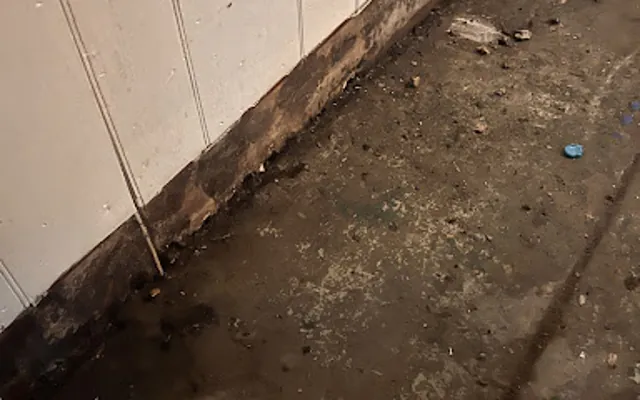
The Medical District's dense fringe of older and rental properties means a burst water heater or supply line in one unit can reach neighbors in hours. The IICRC-standard crews seal and extract immediately to stop the spread.

Crews set up containment barriers to isolate Medical District buildings from one unit to the next, set protective measures to prevent contamination spread, and stop all drain use while crews prepare for extraction.
The equipment is rated for hazardous losses. Crews extract all sewage, then carefully remove soaked carpet, padding, drywall, and flooring, bagging everything for proper disposal.
Crews treat all hard surfaces and framing with hospital-grade antimicrobial, deodorize the entire space to eliminate odor, then run air movers and dehumidifiers until moisture readings confirm the area is dry and sanitary.

Sewage backup cleanup in Medical District generally runs about $2,500 to $9,000, because the contamination requires protective handling, disposal of porous materials, and thorough disinfection on top of drying. Cost depends on how many rooms were affected and how far the sewage spread. Many homeowner policies cover backups only with a sewer endorsement, so crews document the loss carefully for your adjuster.
The Medical District wraps established residential streets around Huntsville's hospitals, mixing older single-family homes with apartments and rentals. Aging supply lines and water heaters are common in this dense fringe, and a burst pipe or an appliance failure in a multi-unit building can reach more than one household before a landlord even hears about it. When sewage backs up, fast response is essential to contain the contamination and protect adjacent units. Medical District buildings mix old and new construction, so aging supply lines and failed water heaters are common triggers. Multi-unit buildings mean a burst pipe or sewage backup in one unit reaches neighbors fast. Sewer backups, storm water intrusion, and appliance failures are the main culprits here. Crawlspace humidity and red-clay soil moisture increase the damage. From Medical District, crews also cover nearby Dallas Mill Village, Five Points, Old Town, Twickenham, Lincoln Mill Village, Downtown Huntsville. See every neighborhood and town on the full service area page.
See all areas servedEvery loss is photographed, measured, and logged from the first visit, so the paperwork holds up with your insurance carrier.
Technicians follow recognized IICRC drying standards and prove the work with daily moisture readings, not guesswork.
Emergency dispatch any hour of the day or night, with a real crew on the way, not a callback in the morning.
A real crew dispatched any hour, not a callback in the morning.
Trained technicians following recognized IICRC drying standards.
Truck-mounted, portable, and submersible for any size loss.
The loss is documented and billed to the carrier directly.
If you are a tenant, tell your landlord or property manager immediately. If you own the building, call directly. Crews coordinate with insurance companies and management companies, so everyone moves forward with confidence about costs and timelines.
Renter and landlord policies cover backups only with a sewer endorsement. Check your policy now, before a loss occurs. Crews document every step of the extraction and drying process, so you have proof for your insurer.
Crews are on call 24 hours a day and can be on the way to Medical District within the hour.
Call (256) 485-6233