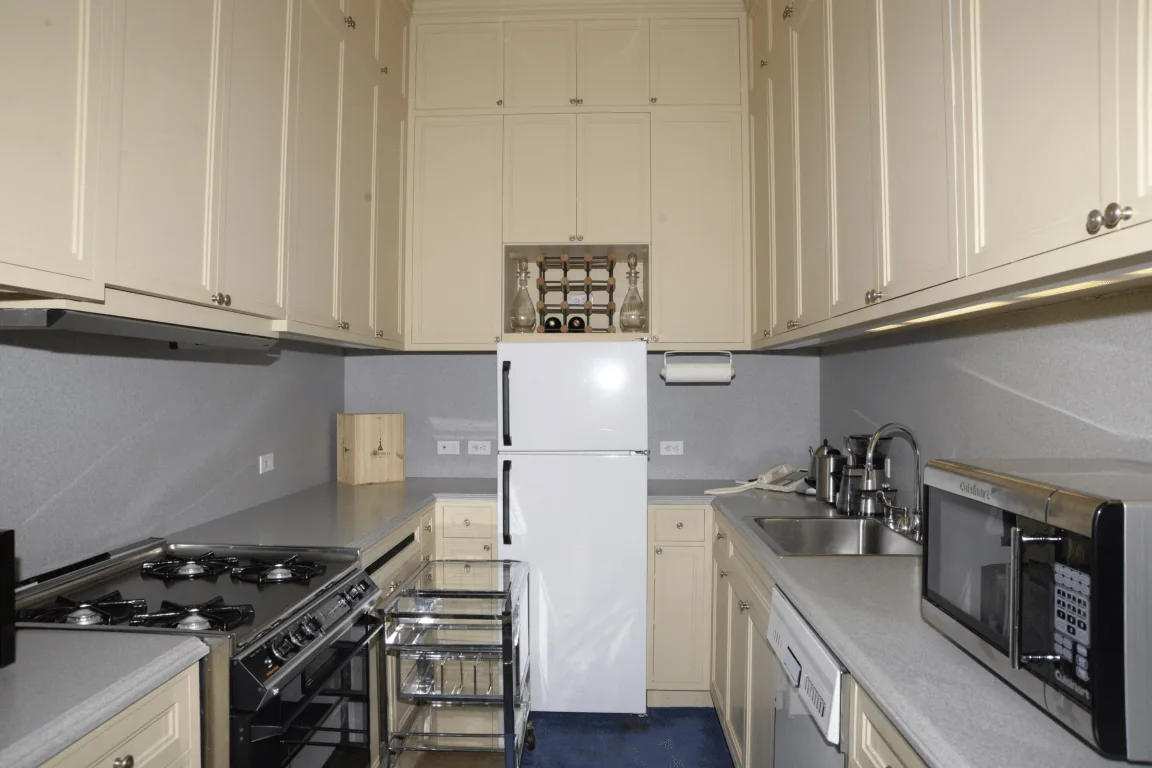
Aging supply lines are the norm in Medical District's rental and older single-family stock, where a burst fitting or failed water heater floods a kitchen in minutes. IICRC-standard extraction and drying prevent mold from taking root in Medical District's dense housing.

Crews reach the refrigerator or water heater, shut off its supply line, and use moisture meters to chart water through the Medical District home's flooring, subfloor, and any adjacent rental or shared spaces.
Standing water is extracted with pumps, and any warped flooring is lifted to prevent further wood rot and allow the subfloor and crawlspace below to dry without trapping new moisture.
Industrial air movers and dehumidifiers dry the entire affected area in Medical District homes, including shared cavities and crawlspaces. Moisture readings are logged daily until the property is verified dry and safe.

Refrigerator leak cleanup in Medical District usually runs about $600 to $3,000. A quickly caught drip is inexpensive, while a slow leak that warped a wide area of flooring, reached the cabinets, or dripped into a crawlspace costs more. Replacing buckled flooring adds to it. Sudden line failures are typically covered by homeowner insurance; slow, hidden leaks may be scrutinized. Crews document the loss for your adjuster.
The Medical District wraps around Huntsville's hospitals with a dense mix of older single-family rentals and aging apartments where original supply lines and water heaters are standard equipment. A burst refrigerator line or a water heater failure in one unit of a multi-family building can reach more than one household before a landlord even hears about it, affecting shared walls, floors, and crawlspaces across the Medical District. Medical District homes and rentals were built decades ago with aging supply lines and water heaters that fail without warning. Dense construction and shared walls between units mean a single failure in the Medical District can become a multi-unit problem quickly, and crawlspaces packed with humidity trap moisture for months if drying isn't thorough. From Medical District, crews also cover nearby Dallas Mill Village, Five Points, Old Town, Twickenham, Lincoln Mill Village, Downtown Huntsville. See every neighborhood and town on the full service area page.
See all areas servedEvery loss is photographed, measured, and logged from the first visit, so the paperwork holds up with your insurance carrier.
Technicians follow recognized IICRC drying standards and prove the work with daily moisture readings, not guesswork.
Emergency dispatch any hour of the day or night, with a real crew on the way, not a callback in the morning.
A real crew dispatched any hour, not a callback in the morning.
Trained technicians following recognized IICRC drying standards.
Truck-mounted, portable, and submersible for any size loss.
The loss is documented and billed to the carrier directly.
Crews work with both the landlord and tenants to map water damage accurately. The documentation shows exactly where water traveled and which areas were affected, helping landlords and insurers sort out shared-damage claims fairly across Medical District multi-unit buildings.
Mold can start growing within 24 to 48 hours in Medical District's humid crawlspaces. That's why extraction and drying must start immediately and continue without pause. The daily monitoring ensures the Medical District property dries fast enough to prevent mold colonization in shared framing.
Crews are on call 24 hours a day and can be on the way to Medical District within the hour.
Call (256) 485-6233