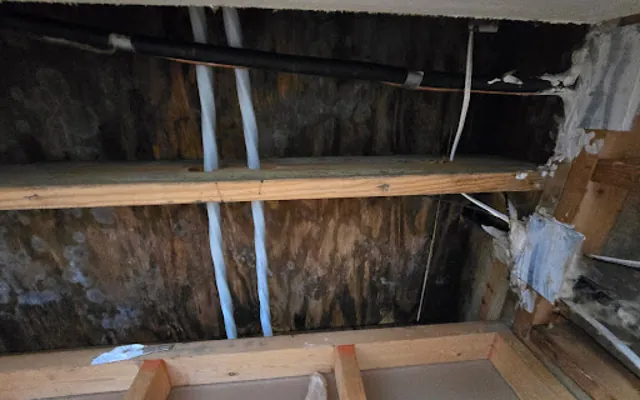
Shared walls and century-old plumbing make roof leaks in Downtown Huntsville spread fast. The IICRC-standard crews respond same-day, stop the leak, extract water, and dry the structure so your neighbors stay dry too.

Crews locate where water entered, tarp the roof or seal the opening to stop active water, and use moisture detection to map saturation through the attic, ceilings, and shared walls so drying targets the right zones.
Pooled water is pumped out, and any insulation or drywall too saturated to salvage is carefully removed to expose the wood framing and deck, protecting both your unit and adjacent spaces from secondary damage.
Air movers and industrial dehumidifiers run on daily moisture readings until framing and wood test bone-dry. Crews then treat surfaces with antimicrobial, rebuild insulation and drywall, and ensure permanent roof repair is coordinated.

Roof leak water damage cleanup in Downtown Huntsville commonly runs about $1,200 to $6,500. Cost depends on how much water entered, how much insulation and drywall must be replaced, and how far the water tracked through the attic and walls. The roof repair itself is separate. Sudden storm and hail damage is usually covered by homeowner insurance, and crews document the loss and coordinate with your adjuster.
Downtown Huntsville's tight historic buildings, converted lofts, and shared wall cavities turn a single roof leak into a multi-unit problem in hours. Water runs through wiring, soaks insulation, and creeps into adjacent spaces where it can undermine finishes and structural wood. That speed demands crews that know the architecture and move fast. Downtown Huntsville's decades-old supply lines, shared crawlspaces, and spring tornado-season downpours create the perfect storm. A single burst fitting or a wind-driven leak can soak framing and spread across floors in hours, especially when plumbing runs through shared walls. From Downtown Huntsville, crews also cover nearby Old Town, Twickenham, Medical District, Dallas Mill Village, Five Points, Lincoln Mill Village. See every neighborhood and town on the full service area page.
See all areas servedEvery loss is photographed, measured, and logged from the first visit, so the paperwork holds up with your insurance carrier.
Technicians follow recognized IICRC drying standards and prove the work with daily moisture readings, not guesswork.
Emergency dispatch any hour of the day or night, with a real crew on the way, not a callback in the morning.
A real crew dispatched any hour, not a callback in the morning.
Trained technicians following recognized IICRC drying standards.
Truck-mounted, portable, and submersible for any size loss.
The loss is documented and billed to the carrier directly.
Shared walls and cavities mean water spreads horizontally as well as down, soaking insulation and wood in adjacent units quickly. The crews use thermal imaging to find every wet zone and extraction points in shared spaces so drying is thorough across all affected areas, not just yours.
Drying time depends on how much water entered and how far it traveled through the building. Typically, active extraction and dehumidifying runs five to seven days for shared-wall situations in Downtown Huntsville. Crews take daily moisture readings and adjust equipment until every zone passes the dryness standard.
Crews are on call 24 hours a day and can be on the way to Downtown Huntsville within the hour.
Call (256) 485-6233