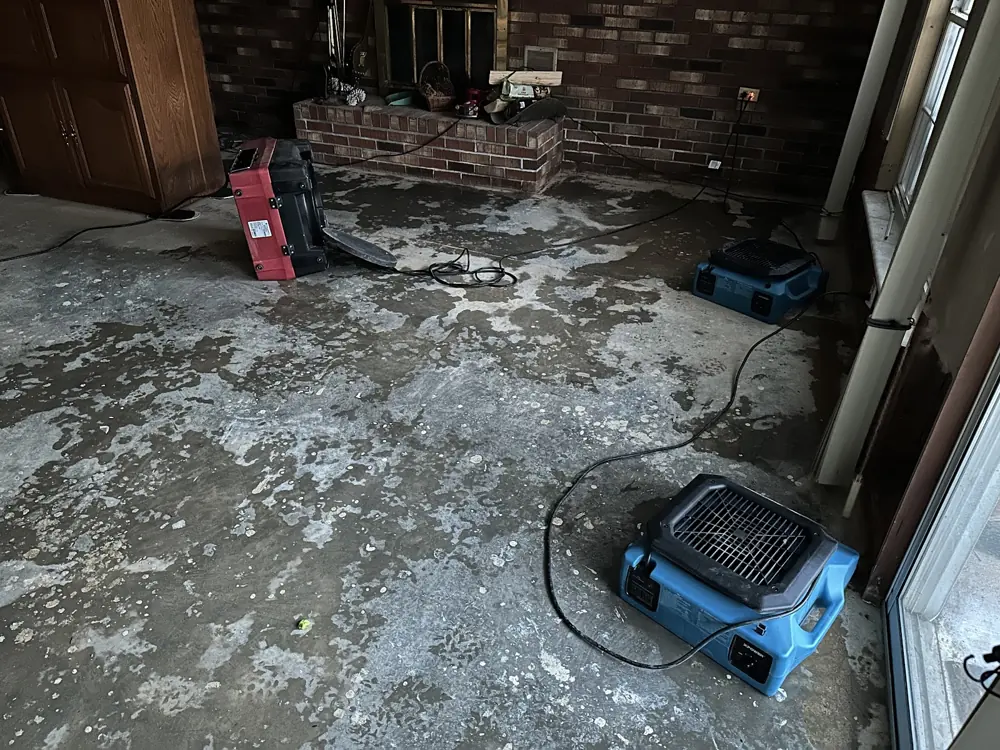
Aging supply lines and water heaters in Medical District multi-unit buildings can flood more than one home at once. The crews respond within two hours to extract and dry, so one tenant's water loss doesn't become everyone's problem.

Crews find the water source and check all affected units or areas, mapping moisture to see which properties need drying and which are at risk of secondary damage.
Crews pump out water and remove wet insulation, drywall, and flooring in all affected areas, working quickly and cleanly to minimize disruption and secondary damage.
Air movers and dehumidifiers run in all affected spaces until moisture is at safe levels, with daily readings and coordination with property management so everyone stays informed.

Garage water damage cleanup in Medical District typically runs about $900 to $4,500. A quick storm intrusion on a bare slab sits low, while a water heater failure that reached the shared wall and moved into the house costs more. Removing and rebuilding lower drywall and insulation adds to it. Sudden appliance failures are usually covered by homeowner insurance; crews document the loss for your adjuster.
The Medical District wraps established residential streets around Huntsville's hospitals, mixing older single-family homes with apartments and rentals in a dense fringe. Aging supply lines and water heaters are common in this mix, and when a burst pipe or an appliance failure happens in a multi-unit building, the water can reach more than one household before a landlord or tenant even knows it's started. Medical District's mix of older single-family homes and multi-unit rentals means aging supply lines and water heaters run through shared walls and floor spaces. A burst line in one apartment can flood a basement or crawlspace shared with neighbors, and a failed water heater supply line in a single-family rental spreads water to the garage and crawlspace fast. Landlords and tenants both need a fast response to limit the damage. From Medical District, crews also cover nearby Dallas Mill Village, Five Points, Old Town, Twickenham, Lincoln Mill Village, Downtown Huntsville. See every neighborhood and town on the full service area page.
See all areas servedEvery loss is photographed, measured, and logged from the first visit, so the paperwork holds up with your insurance carrier.
Technicians follow recognized IICRC drying standards and prove the work with daily moisture readings, not guesswork.
Emergency dispatch any hour of the day or night, with a real crew on the way, not a callback in the morning.
A real crew dispatched any hour, not a callback in the morning.
Trained technicians following recognized IICRC drying standards.
Truck-mounted, portable, and submersible for any size loss.
The loss is documented and billed to the carrier directly.
Your lease usually dictates this, but most landlords are responsible for major appliance failures if the unit is supplied. What matters for damage recovery is that the loss is documented immediately. Call right away, and crews will document the damage and source for your landlord's insurance. A quick response saves the insurance claim and prevents mold, which would be much more expensive.
Aging supply lines are the biggest risk in Medical District buildings, especially multi-unit ones where a failure affects many tenants. Have a plumber inspect all visible lines for corrosion or wear, and consider replacing lines that are over 30 years old before they fail. Routine water heater maintenance extends life, too. And keep the number posted so any tenant can call immediately if they spot water. Early response stops small leaks from becoming major losses.
Crews are on call 24 hours a day and can be on the way to Medical District within the hour.
Call (256) 485-6233