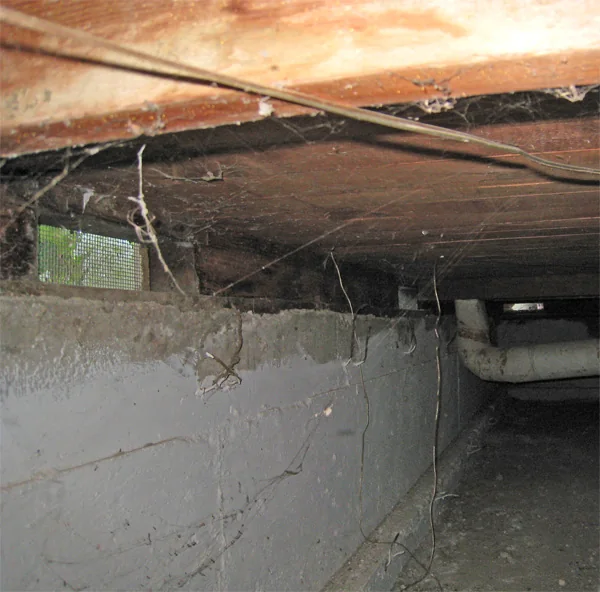
The Medical District's aging supply lines and water heaters serve dense multi-unit buildings where one burst pipe can flood multiple homes. The IICRC-standard crews respond fast to contain the damage and dry common crawlspaces before mold takes hold.

Crews extract standing water from Medical District crawlspaces serving multiple homes, assessing saturation in the soil and shared framing. The crew coordinates with landlords and multiple tenants to ensure safe access and thorough work.
Wet insulation in shared spaces can spread spores between units. Crews remove all saturated materials and bag them for disposal, clearing the crawlspace for air circulation.
Dehumidifiers and air movers run until shared crawlspace moisture levels reach safe standards. Crews check readings daily and involve landlords in the verification process.

Crawlspace water removal in Medical District typically runs about $1,500 to $6,000. The range reflects how much standing water is present, how much insulation and vapor barrier must be replaced, and whether joists or subfloor need drying or repair after prolonged saturation. Sudden losses from a burst line or storm are often covered; chronic seepage may not be. Crews document the cause for your adjuster.
The Medical District wraps established residential streets around Huntsville's hospitals, mixing older single-family homes with apartments and rentals. Aging supply lines and water heaters are common in this dense fringe, and a burst pipe or an appliance failure in a multi-unit building can reach more than one household and the shared crawlspace before a landlord even hears about it. The Medical District's dense rental and multi-unit stock means aging plumbing serves many homes from one crawlspace. A single supply-line burst or water-heater failure can flood multiple units and the shared crawlspace below, making rapid extraction the difference between limited damage and neighborhood-wide mold. From Medical District, crews also cover nearby Dallas Mill Village, Five Points, Old Town, Twickenham, Lincoln Mill Village, Downtown Huntsville. See every neighborhood and town on the full service area page.
See all areas servedEvery loss is photographed, measured, and logged from the first visit, so the paperwork holds up with your insurance carrier.
Technicians follow recognized IICRC drying standards and prove the work with daily moisture readings, not guesswork.
Emergency dispatch any hour of the day or night, with a real crew on the way, not a callback in the morning.
A real crew dispatched any hour, not a callback in the morning.
Trained technicians following recognized IICRC drying standards.
Truck-mounted, portable, and submersible for any size loss.
The loss is documented and billed to the carrier directly.
That depends on the lease and insurance policies. Crews document everything the landlord and tenants need for their claims. Usually, the water heater owner's homeowner's or renters' insurance covers the extraction and drying work.
Very fast in the humid valley climate. Within 24 hours of a flood, mold can germinate and spread through wet insulation and into adjacent units via the air space. Professional drying within hours of the water event is the only defense.
Crews are on call 24 hours a day and can be on the way to Medical District within the hour.
Call (256) 485-6233