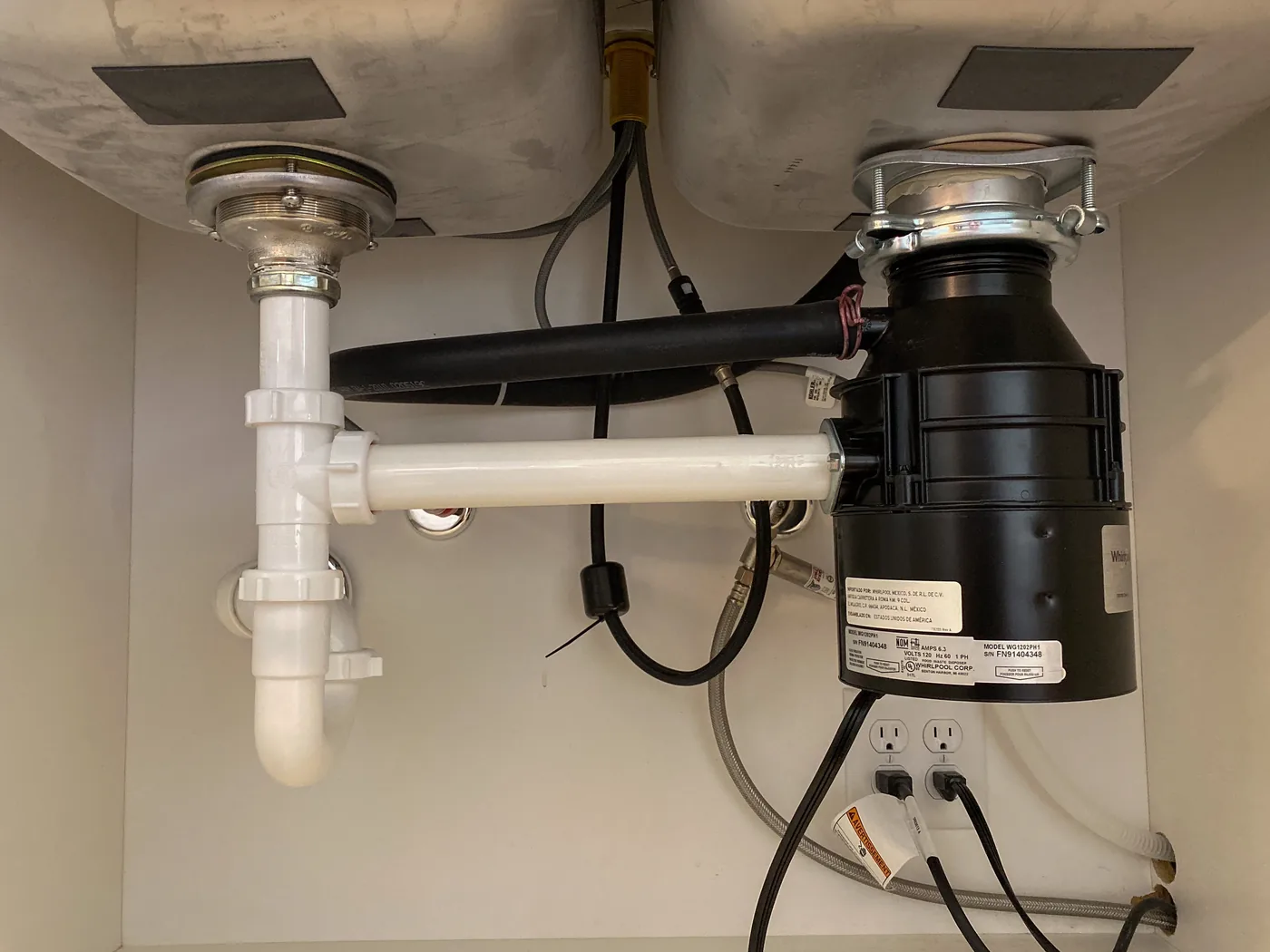
A garbage disposal leak in Madison means water spreading under your kitchen and into the foundation or crawlspace where it becomes a mold risk fast in the humid climate. The crews respond within hours to extract water and dry your home to standard.

Crews shut off water at the main, locate the failure point, and scan beneath your kitchen for standing water using thermal imaging and moisture meters, whether your home sits on a slab or crawlspace.
All standing water is removed using equipment sized for the specific foundation type, and crews improve drainage so water cannot pool again if you have another plumbing failure in the future.
Dehumidifiers positioned for maximum coverage run continuously for five to seven days, with daily moisture readings showing that your slab or crawlspace has dried to the standard required by your insurance and the own quality standards.

Cleanup after a garbage disposal leak in Madison usually runs about $500 to $2,500. A drip caught early is inexpensive, while a long-running leak that ruined the cabinet base, reached the subfloor, or dripped into the crawlspace costs more. Replacing the cabinet floor or a section of flooring adds to it. Sudden failures may be covered by homeowner insurance; crews document the loss for your adjuster.
Madison is an established Huntsville suburb where homes built over the past fifty years sit on everything from crawlspaces to slabs. A disposal seal failure or burst supply line in either type of foundation creates a moisture problem that spreads silently if extraction and drying do not begin within hours of the initial leak. Madison's suburban building history means a wide range of plumbing ages and conditions. The Tennessee Valley's hot, humid summers accelerate mold growth in any wet materials left sitting for more than a day. Both slab and crawlspace homes here are vulnerable, and speed of response is the key to preventing expensive repairs. From Madison, crews also cover nearby Moores Mill, Meridianville, Jones Valley, Gurley, Owens Cross Roads, Harvest. See every neighborhood and town on the full service area page.
See all areas servedEvery loss is photographed, measured, and logged from the first visit, so the paperwork holds up with your insurance carrier.
Technicians follow recognized IICRC drying standards and prove the work with daily moisture readings, not guesswork.
Emergency dispatch any hour of the day or night, with a real crew on the way, not a callback in the morning.
A real crew dispatched any hour, not a callback in the morning.
Trained technicians following recognized IICRC drying standards.
Truck-mounted, portable, and submersible for any size loss.
The loss is documented and billed to the carrier directly.
Concrete is porous, and water wicks underneath and spreads laterally before it ever shows on the surface. Humidity accumulates under the slab where you cannot see it, and drying takes longer because air cannot circulate beneath concrete the way it can in a crawlspace. Crews use thermal imaging to find where water is hiding and specialized equipment to remove moisture from beneath slabs.
A standard dehumidifier may help, but it is not enough for a serious leak. Industrial dehumidifiers move many times more air than consumer models, and they are sized correctly for crawlspace volume and conditions. Improper sizing means slow drying that allows mold to establish before moisture is removed. Professional equipment and daily monitoring are essential.
Crews are on call 24 hours a day and can be on the way to Madison within the hour.
Call (256) 485-6233