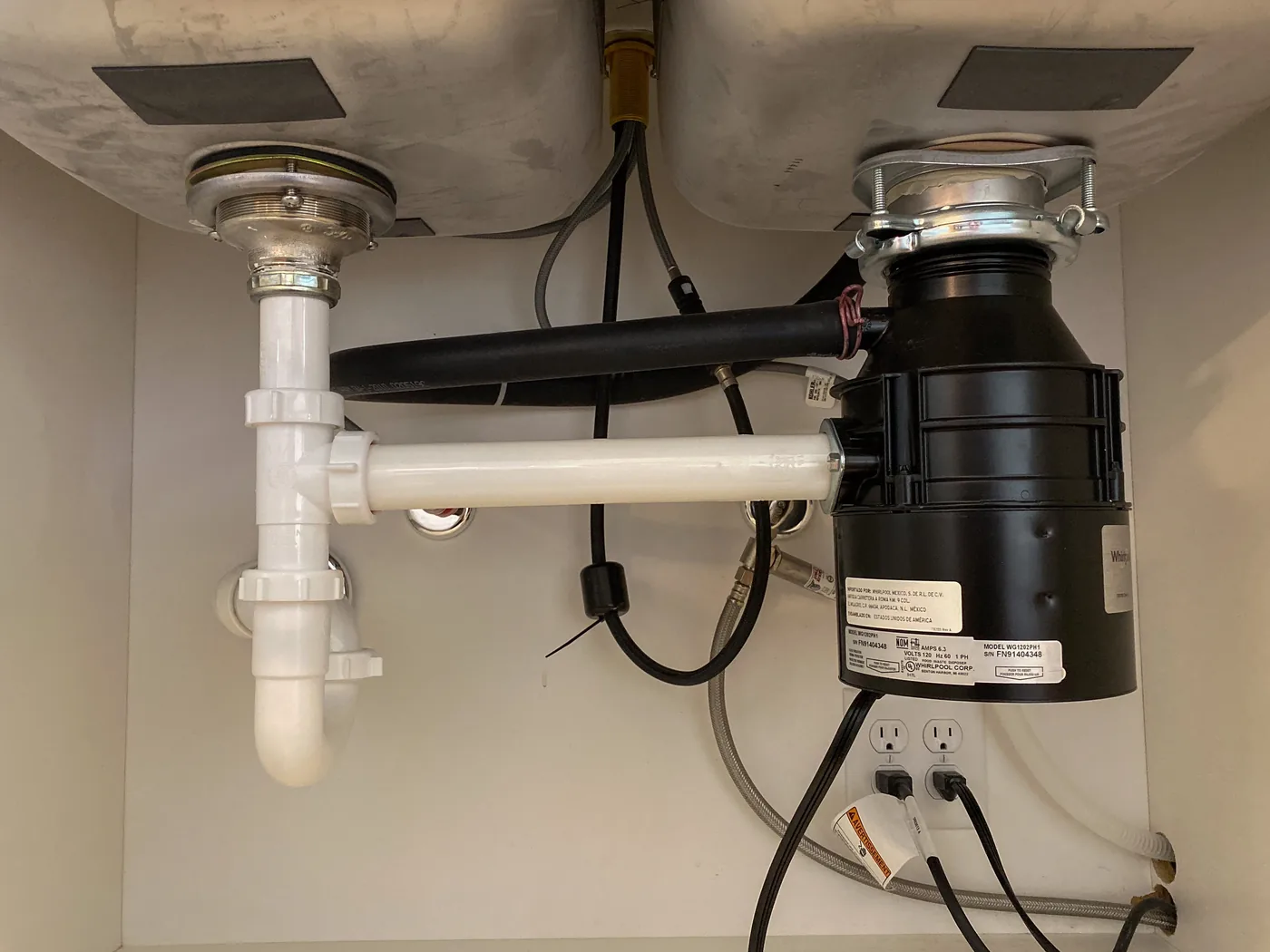
Slab leaks in Harvest subdivisions can run silently for weeks, but when combined with a garbage disposal failure under the sink, water spreads across the foundation faster than you might expect. The IICRC crew responds fast to extract water and dry your slab before mold takes hold.

Crews shut water at the main, locate the failure point, and use thermal imaging to find water trapped beneath your Harvest home's slab even if no surface staining is yet visible.
Industrial extraction equipment removes all standing water from beneath the slab and saturated soil surrounding the foundation, with improved drainage installed to prevent pooling if another plumbing failure occurs during the next storm.
Dehumidifiers run continuously for five to seven days, with daily moisture readings at multiple points beneath your slab proving that your Harvest home has dried to the standard required by your insurance and the IICRC certification.

Cleanup after a garbage disposal leak in Harvest usually runs about $500 to $2,500. A drip caught early is inexpensive, while a long-running leak that ruined the cabinet base, reached the subfloor, or dripped into the crawlspace costs more. Replacing the cabinet floor or a section of flooring adds to it. Sudden failures may be covered by homeowner insurance; crews document the loss for your adjuster.
Harvest is a large suburban community northwest of Huntsville built out with newer subdivisions where slab foundations dominate the streets. A garbage disposal failure or quiet slab leak in a Harvest home can spread water laterally under the concrete for days before visible signs appear, and the humid Tennessee Valley climate means mold begins establishing quickly in hidden spaces. Harvest's newer subdivisions feature slab-on-grade foundations that trap water when supply lines fail or yard drainage is overwhelmed by spring tornado-season storms. Older homes scattered across former farmland here sit on crawlspaces where red-clay soils hold moisture year-round. The combination means water problems in Harvest can be slow to reveal themselves but fast to become serious if extraction is delayed. From Harvest, crews also cover nearby Owens Cross Roads, Gurley, Hazel Green, New Market, Triana, Meridianville. See every neighborhood and town on the full service area page.
See all areas servedEvery loss is photographed, measured, and logged from the first visit, so the paperwork holds up with your insurance carrier.
Technicians follow recognized IICRC drying standards and prove the work with daily moisture readings, not guesswork.
Emergency dispatch any hour of the day or night, with a real crew on the way, not a callback in the morning.
A real crew dispatched any hour, not a callback in the morning.
Trained technicians following recognized IICRC drying standards.
Truck-mounted, portable, and submersible for any size loss.
The loss is documented and billed to the carrier directly.
Look for soft spots on the floor, warm spots that do not match heating, or a musty smell rising from beneath the slab. Reduced water pressure in certain fixtures can also indicate a line problem. If you notice any of these signs, call for a professional inspection with moisture meters before the problem spreads further under your home.
Not immediately, but if left unaddressed for weeks or months, water can soften the soil beneath your slab and cause settlement or cracking. That is why fast extraction and drying are essential. Crews document everything so your insurance understands the severity and approves all necessary repairs to prevent future structural problems.
Crews are on call 24 hours a day and can be on the way to Harvest within the hour.
Call (256) 485-6233