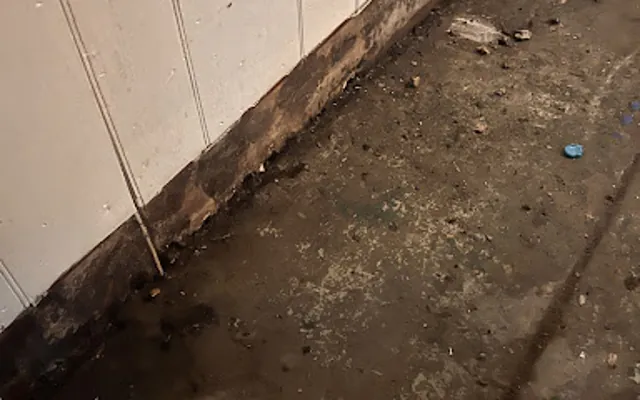
Harvest's large suburban community of newer subdivisions means slab foundations dominate, where a quiet slab leak can run for weeks, and a severe spring storm can overwhelm yard drainage fast. The crews locate and extract immediately before structural damage spreads.

Crews use moisture mapping to find the water under the Harvest slab, set up containment to protect the house, and stop all drain use while crews prepare extraction.
The crews extract all sewage with equipment rated for hazardous losses. Crews remove soaked carpet, padding, and subfloor, bagging everything according to strict biohazard protocols.
Crews treat all hard surfaces and framing with hospital-grade antimicrobial, deodorize the entire space, then run air movers and dehumidifiers until moisture readings confirm the Harvest home is dry and safe to rebuild.

Sewage backup cleanup in Harvest generally runs about $2,500 to $9,000, because the contamination requires protective handling, disposal of porous materials, and thorough disinfection on top of drying. Cost depends on how many rooms were affected and how far the sewage spread. Many homeowner policies cover backups only with a sewer endorsement, so crews document the loss carefully for your adjuster.
Harvest is a large suburban community northwest of Huntsville, built out with newer subdivisions and a scattering of older homes on former farmland. Slab foundations dominate the newer streets, where a quiet slab leak can run for weeks, while a severe spring storm can overwhelm yard drainage and send water toward garages and lower rooms. When sewage backs up in Harvest's subdivisions, finding and extracting the water fast is essential. Harvest's slab-on-grade construction means leaks hide under concrete and run undetected for weeks. Supply-line failures, water heater breaks, and sewer backups are common triggers in the newer subdivisions. Spring tornado-season storms can overwhelm yard drainage. The region's red-clay soils trap moisture under the slabs. From Harvest, crews also cover nearby Owens Cross Roads, Gurley, Hazel Green, New Market, Triana, Meridianville. See every neighborhood and town on the full service area page.
See all areas servedEvery loss is photographed, measured, and logged from the first visit, so the paperwork holds up with your insurance carrier.
Technicians follow recognized IICRC drying standards and prove the work with daily moisture readings, not guesswork.
Emergency dispatch any hour of the day or night, with a real crew on the way, not a callback in the morning.
A real crew dispatched any hour, not a callback in the morning.
Trained technicians following recognized IICRC drying standards.
Truck-mounted, portable, and submersible for any size loss.
The loss is documented and billed to the carrier directly.
Look for warm spots on the floor, higher-than-normal water bills, or sounds of running water when all fixtures are off. If you notice any of these signs, call immediately. Crews use professional moisture mapping to locate hidden leaks so repairs can begin fast and limit damage.
Crews handle extraction, disinfection, and drying. A professional plumber must repair the supply line itself. After crews verify that the home is dry and sanitary, you hire a plumber to fix the leak and a contractor to rebuild the flooring.
Crews are on call 24 hours a day and can be on the way to Harvest within the hour.
Call (256) 485-6233