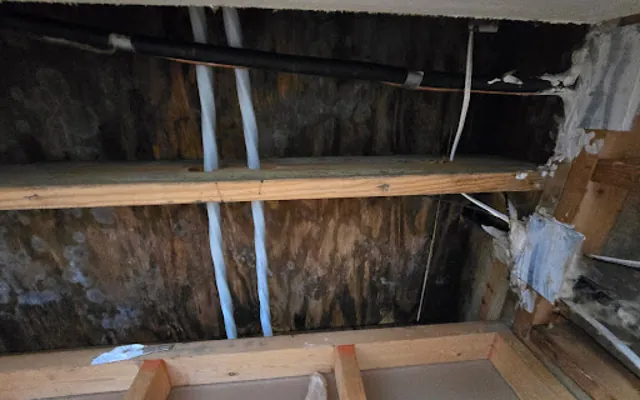
Ice dam water pooling in your Blossomwood brick home demands immediate action. The crews respond fast to this mid-century neighborhood at the base of Monte Sano, mapping and drying attic and ceiling areas before meltwater seeps into the valuable plaster and wood framing of your 1940s-to-60s house.

Crews walk the attic immediately after a Blossomwood loss, mapping the water path from the roof line down through framing and insulation. Crews stop active dripping, measure moisture in each cavity, and protect valuable plaster ceilings and brick from further wetting as crews develop the drying plan.
Any insulation or ceiling materials too wet to recover are removed from Blossomwood attics, exposing the roof deck and rafter tails so air circulation can start right away. This halts mold growth before it takes hold in the dense fiberglass insulation many Blossomwood homes have.
Air movers and dehumidifiers run continuously in Blossomwood homes, with special attention to the attic-to-ceiling interface where moisture lingers. Once drying is confirmed, crews rebuild insulation and repair or replace any drywall, returning Blossomwood homes to full condition with roof repairs coordinated separately.

Ice dam water damage cleanup in Blossomwood typically runs about $1,500 to $6,000 on the rare occasion it occurs. Cost depends on how much water backed into the attic and ceilings, how much insulation and drywall must be replaced, and how far the water traveled inside. Roof repair is separate. Sudden storm-driven damage is usually covered by homeowner insurance; crews document the loss for your adjuster.
Blossomwood spreads across shaded lots at the foot of Monte Sano, filled with solid brick homes built in the mid-20th century when Huntsville was booming. Mountain runoff funnels toward yards and crawlspaces when spring storms hit, and original supply lines in many Blossomwood homes are decades past their service life. Ice dam backup and burst pipes both occur here regularly, and water reaching the attic can damage plaster ceilings fast. Blossomwood homes sit on the downslope of Monte Sano, meaning runoff from heavy rain and spring storms concentrates in yards and crawlspaces. The mid-century construction used water heaters and supply lines near their end of life, so supply-line ruptures and ice dam backups happen regularly in this neighborhood. From Blossomwood, crews also cover nearby Merrimack Mill Village, Lowe Mill Village, Lincoln Mill Village, Five Points, Dallas Mill Village, Medical District. See every neighborhood and town on the full service area page.
See all areas servedEvery loss is photographed, measured, and logged from the first visit, so the paperwork holds up with your insurance carrier.
Technicians follow recognized IICRC drying standards and prove the work with daily moisture readings, not guesswork.
Emergency dispatch any hour of the day or night, with a real crew on the way, not a callback in the morning.
A real crew dispatched any hour, not a callback in the morning.
Trained technicians following recognized IICRC drying standards.
Truck-mounted, portable, and submersible for any size loss.
The loss is documented and billed to the carrier directly.
Crews handle water extraction and structural drying. Roof repair, including ice dam prevention, is typically a separate professional contractor. Crews document the water entry point and coordinate with your roofer so the repair prevents future backups to your attic.
Drying depends on how much insulation and framing were wet and how dense your attic is. In Blossomwood, crews typically dry an attic loss in five to eight days with continuous equipment running. Crews track progress daily, so you see exactly when drying is complete.
Crews are on call 24 hours a day and can be on the way to Blossomwood within the hour.
Call (256) 485-6233